
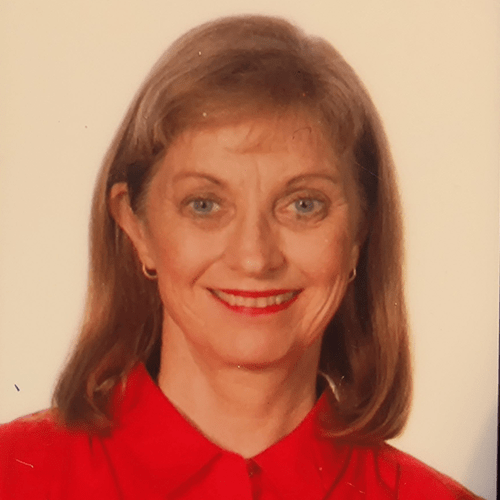
Dr Lynette Ellis
Born in Cairns in Far North Queensland, Dr Lynette Ellis grew up with swimming as an integral part of daily life. In a region known for its hot, humid summers and before the widespread use of air conditioning, weekends were often spent cooling off in nearby rivers and lakes. As a result, swimming competence was considered an essential life skill from an early age.
After completing her primary and secondary education in Gordonvale, Dr Ellis was awarded a scholarship to attend the Townsville College of Advanced Education, now part of James Cook University. Over the following decades, she built a distinguished career in education, teaching in a range of primary schools across regional Queensland. During this time, she married and raised four children.
A significant turning point in Dr Ellis’s life came with the birth of her third child, Hugh, who was born with Down syndrome. This experience marked the beginning of her journey into the world of disability advocacy and inclusion. Throughout her more than forty years in education, spanning a variety of roles, Dr Ellis has remained committed to helping children learn and thrive. Her passion for inclusion grew as she witnessed children with disability being excluded from sporting activities for various reasons. Determined to address these inequities, she became a strong advocate for ensuring that students with disability could participate fully in the same opportunities available to their peers.
With the support and encouragement of Andrew “Herbie” Howard, Dr Ellis embarked on a PhD focused on investigating the benefits of swimming lessons for the health and wellbeing of young people with disability—the subject of this presentation.
Her doctoral research explored how swimming contributes to the health and wellbeing of young people with disability. Through participant interviews, the study revealed that regular swimming lessons foster confidence, social connection, a sense of community among families, and pathways toward future success. The swimming pool emerged as a uniquely inclusive environment where young people with disability could participate alongside their peers on equal terms.
Through both her research and professional experience, Dr Ellis has witnessed the power of swimming to break down physical and social barriers, promote acceptance, and create meaningful opportunities for participation. Swimming lessons provide a platform for individuals to set goals, develop resilience and independence, and build connections with others in a safe and supportive environment. These benefits extend beyond the individual, positively influencing families, schools, and communities.
For Dr Lynette Ellis, swimming represents the possibility of great expectations and great outcomes for all.